
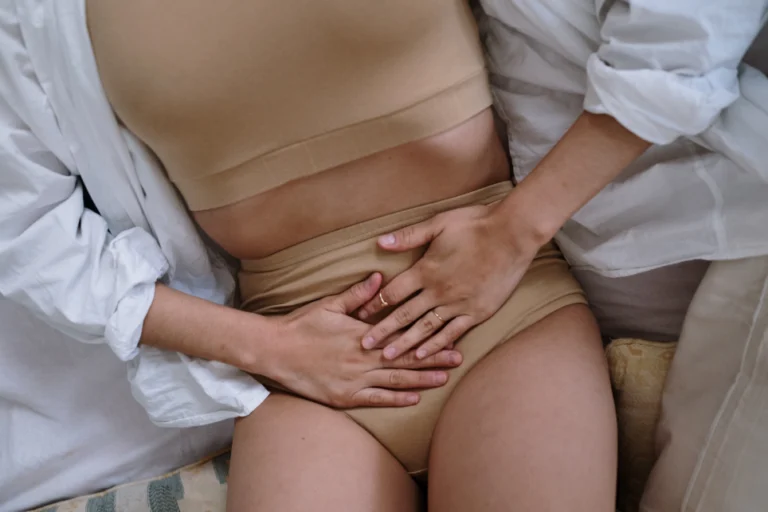
The latest wellness trend that has been on my radar recently is cycle syncing.
And unlike with Project 50 and That Girl, this is a trend I can wholeheartedly get on board with.
Here’s everything you need to know about cycle syncing and how to work in harmony with each phase of your menstrual cycle to maximise health and productivity.
The backstory.
Since the beginning of my wellness journey, I’ve been making a more conscious effort to put myself and my mental health first. And this has had an effect on how I treat my period.
I no longer allow my period to dictate how I feel or control my actions.
Instead, I’m learning more and more about how I can work with my cycle rather than against it.
And this has led me down the path of cycle syncing – aligning my lifestyle and habits with each phase in my menstrual cycle.
I’m not an expert at cycle syncing quite yet, but adjusting my diet, exercise and productivity to my cycle has helped me to better manage my period and has actually made them a lot more bearable.
Honestly, who knew this was even possible? I wish they taught this stuff in school, so I could have learnt it sooner.
P.S. The content found in this blog post is for informational and educational purposes only. It is not intended to provide medical advice or to take the place of medical advice. All readers of this content are advised to consult with a qualified healthcare professional before acting upon any information presented here.
What is cycle syncing?
We all know that hormones are temperamental and not to mention annoying.
They fluctuate throughout your menstrual cycle, affecting your body, mood, emotions, appetite and energy levels.
But thanks to Alisa Vitti, hormonal expert and founder of Flo Living, there is now a solution for you to take back control of these hormonal shifts and work in harmony with your “body’s biochemistry.”
And it’s called cycle syncing.
Cycle syncing is the practice of adjusting your lifestyle, diet and exercise routines to better align with each phase of your menstrual cycle.
The idea is that by making these changes, you can better support the hormonal needs of your body and make your cycle work for you rather than fighting against it.
“We can’t access our full potential when we’re living by someone else’s rules and not listening to the wisdom within.”
Alisa Vitti | In The Flo
Benefits of cycle syncing
Cycle syncing is one of the most effective things you can do to better balance your hormones and energy levels during your period.
But that’s not all. When you practice the concept of cycle syncing, you are opening yourself up to many other beneficial changes, including:
- Feeling more energised
- Experiencing fewer mood swings
- Easing uncomfortable menstrual symptoms like cramps and bloating
- Making workouts more effective
- Reducing weight fluctuations
- Lowering stress levels
- Improved fertility support
- Increased productivity and focus
Anyone can benefit from cycle syncing, but to be able to truly harness its power, you need to learn and understand more about each menstrual phase.
The 4 phases of a menstrual cycle
A woman’s menstrual cycle takes on average 28 days and is divided into four phases:
- Menstrual phase (Day 1 – 5)
- Follicular phase (Day 6 – 14)
- Ovulation phase (Day 15 – 17)
- Luteal phase (Day 18 – 28)
It’s important to note that the length of each phase can differ from woman to woman as well as change over time. I encourage you to do your own research and get to really know your own cycle before making any lifestyle changes.
Phase 1 | Menstrual phase
The menstrual phase is the first stage of your cycle. It’s also when you get your period.
Because an egg from your previous cycle is not fertilised and no pregnancy takes place, levels of oestrogen and progesterone drop.
The thickened lining of your uterus is no longer needed and so it sheds through your vagina.
This can take anywhere between 3 to 7 days.
It’s during this phase that you will experience the majority of menstrual symptoms such as period cramps, sore breasts, bloating, mood swings, irritability, headaches, tiredness and low back pain.
Phase 2 | Follicular phase
Next up is the follicular phase, which actually starts on the first day of your period, so there is some overlap.
It’s all a bit technical, so I will keep it short and simple, but basically, one part of your brain (the hypothalamus) sends a signal to another part of your brain (the pituitary gland) to start releasing a follicle-stimulating hormone.
This hormone encourages your ovaries to start producing small sac-like follicles which each contains an immature egg. Only the healthiest egg will eventually mature and be released, ready for fertilisation.
This can last anywhere from 11 to 27 days, depending on your cycle, with the average being 16 days.
Phase 3 | Ovulation phase
It is during this phase that you are at your most fertile and can get pregnant.
Ovulation happens right in the middle of your menstrual cycle, around day 14, and only lasts for 24 hours.
During the ovulation stage, your ovary releases a mature egg, which then travels down the fallopian tube toward the uterus and waits to be fertilised by sperm.
FUN FACT: Sperm can live in your body for up to 5 days, so if you’ve had sex up to 5 days prior to ovulation, you can still get pregnant. Make sure you take necessary precautions if you’re not currently looking to conceive.
Phase 4 | Luteal phase
If fertilisation doesn’t happen during ovulation, then your body enters the final stage of its cycle.
The luteal phase.
In short, the follicle which released your mature egg will shrink away and be reabsorbed by the body. This then leads to decreased levels of oestrogen and progesterone, which triggers the menstrual phase and the start of your period.
It’s during this phase that you might experience symptoms of PMS (premenstrual syndrome), including bloating, breast swelling or tenderness, mood swings, headaches, weight gain, changes in sexual desire, food cravings and trouble sleeping.
This phase lasts between 11 and 17 days and is always John’s favourite part of my cycle, haha!
How to sync your lifestyle to your menstrual cycle
Now that you know a bit more about the individual menstrual phases, you can start to adapt your lifestyle and routines to work with your cycle rather than against it.
Over time, you will be able to figure out when you feel most energised and productive during your cycle and when you want to curl up in bed and just do nothing.
But don’t worry, I’m not just going to throw you into the deep end and expect you to figure it out by yourself.
Here are a few tips and tricks on how to practice cycle syncing when it comes to exercise, your diet and productivity.
“By re-framing the inconvenience of our monthly period, cycle syncing can be a game-changing way to reclaim your life and productivity.”
Jessica Harris | Harpers Bazaar
Exercise
Just remember, everybody is different. It’s essential to listen to your own body and learn how exercise affects it during your cycle so you can always do what works best for you. Use these tips as a guide only. If you feel like you can manage more intensity during your follicular and luteal phase, then do it. If you find that your energy is low during ovulation, then don’t push yourself. Learn to listen to your body and give in to what it needs.
- Menstrual phase: Your energy is likely to be at its lowest thanks to progesterone and oestrogen levels being low, so don’t push or force your body to do too much. Rest is key during this phase. High-intensity workouts are a no-go, so instead stick to gentle exercises like stretching, walking or light yoga.
- Follicular phase: As your body prepares for ovulation, your energy levels will begin to increase, but your hormones are still low, which can cause poor stamina. Instead of going all in, use this time to engage in light cardio exercises. Think running, hiking or swimming.
- Ovulation phase: Hormones are now peaking, and your energy will be at its highest. Use this opportunity to hit the gym and enjoy high-intensity workouts. Now is the time to try out that HIIT class you’ve been avoiding or join a new spin class.
- Luteal phase: As your body prepares to enter the menstrual phase, you might notice that your energy levels begin to drop. Stick to low-medium intensity exercises like strength training, pilates or intense yoga.
Save this mini-guide on Pinterest

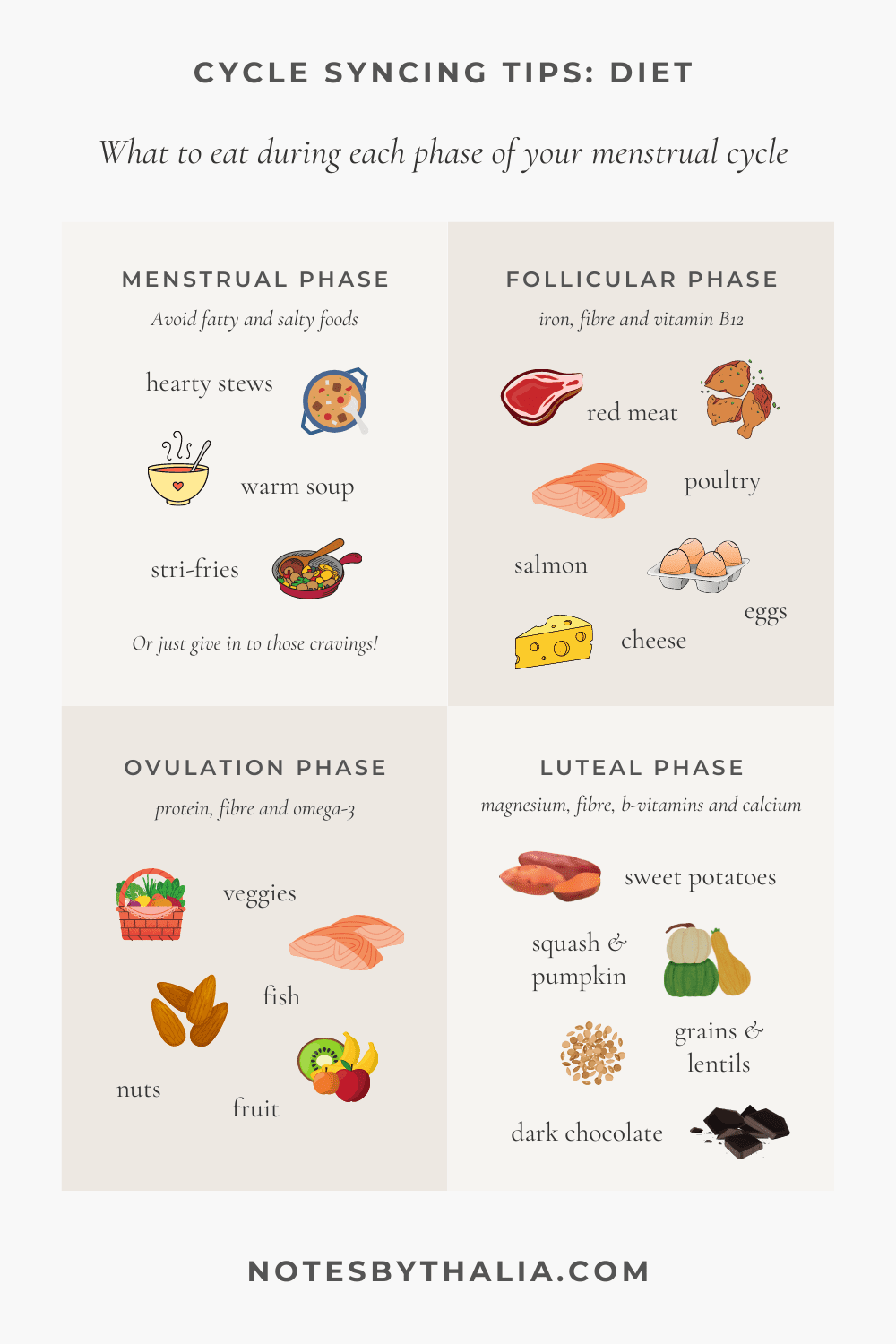
Diet
It’s essential to eat a healthy balanced diet all year round regardless of what menstrual phase you find yourself in. However, you know your body best. Eat what you think is right for you and don’t beat yourself up if you over-indulge during your period.
- Menstrual phase: I’m a firm believer in succumbing to cravings during my period because they bring me comfort and actually make me feel better. This is the phase where I don’t watch what I put into my mouth and includes lots of chocolate, fried chicken and sweet-tasting things. Cycle syncing experts would suggest avoiding or limiting fatty and salty foods but sometimes they’re just 100% necessary. Consider eating comforting stews, warm soups and stir-fries.
- Follicular phase: After menstruation, you will want to nourish and replenish your body with all the nutrients it might have lost. Focus on eating foods rich in iron, fibre and vitamin B12 (which helps to produce new red blood cells). You might want to consider red meat, poultry, cheese, eggs and fish such as salmon.
- Ovulation phase: Because your hormones are now increasing, your metabolism actually speeds up so don’t be surprised if you’re eating more during this phase to stay full and energised. It’s completely normal and in fact, Alisa Vitti even states, “your caloric needs increase by 16%.” Stick to protein-rich foods, fibre-rich veggies, fruits, nuts and foods high in omega-3 like fish.
- Luteal phase: As this phase is right before your period and PMS has officially joined the party, try to avoid any foods that will trigger bloating or discomfort. This for me, is sadly bread as I find it causes my breasts to swell to the point of pain, whereas if I avoid white carbs before my period, my breasts are painless. Opt for foods rich in magnesium, fibre, B-vitamins and calcium. Foods to consider are starchy vegetables like sweet potatoes and squash, dark chocolate, whole grains and lentils.
Save this mini-guide on Pinterest
Productivity
When it comes to productivity, there is no one-size-fits-all solution. It is unique to the individual, and it is down to you to determine what you are and are not capable of. Be realistic with yourself and only take on what you can. And remember to only use these tips as a guide. You might find that during your menstrual phase, you are super productive and want to dive into deep work. I’ve been there before. But during other months, my period takes it out of me, and I don’t want to do anything. The key is to remain flexible and always be mindful of your capabilities.
- Menstrual phase: As I mentioned above, energy is at its lowest during the menstrual phase and most likely so will your creativity and focus. Instead of trying to engage in deep work, get comfortable with taking a step back from your to-do list during this stage. Avoid tight deadlines and allow yourself to work at a slower pace, prioritising only 1-3 important tasks that can be completed easily. Your main objective during this phase should be to prioritise rest and sleep.
- Follicular phase: Energy is on the rise allowing you to start getting shit done. You are able to focus more, so spend this time getting creative, starting new projects and learning new things.
- Ovulation phase: Now that your energy levels are peaking, it’s time to dive into your workload. It is also suggested that during this stage, women feel more social, so you might want to use this time to get on calls or do important outreach, set up meetings and engage in collaborations.
- Luteal phase: A lot of hormonal changes and PMS symptoms mean that you might notice a significant drop in productivity. Thanks to mood swings being present during this stage, it’s normal not to want to interact with people as much as you wanted to during the ovulation phase, and instead, you might want to retreat inside yourself. Spend this time doing simpler tasks like admin or reflecting on the previous few weeks. Celebrate your small wins to lift your mood a bit and fully focus on time by yourself and self-care.
Save this mini-guide on Pinterest

Final thoughts
I hope this post on how to sync your lifestyle to your menstrual cycle has been helpful.
I’m in no way medically trained on cycle syncing, but I write this with my own experience in mind in the hope that it will inspire and help you in some way.
Whether that is to make you feel less alone, give you support or encourage you to make a change.
Remember, cycle syncing is not one-size-fits-all advice. It might also not work for everybody. I encourage you to use the above information as inspiration only and find what works best for you and your health before sticking with it.
You’ve got this.
Thalia xx
Further reading
- WomanCode by Alisa Vitti
- In The Flo by Alisa Vitti
- Flo Living Blog
- Period Power by Maisie Hill



Terry
So what if I don’t get the full 4 phases, or not anymore? I became familiar with cycle synching a few months ago and I’ve begun to suspect by monitoring my energy levels that my ovulation phase lasts only a couple of days before my hormones tank and I have no energy or motivation. I’m likely perimenopausal so my irregular periods don’t help to mark when a new cycle begins, but if it’s now only 3 weeks long how am I supposed to get anything done when I feel crappy 2/3 of the time?
Thalia
Hi Terry, thank you for leaving a comment and adding to the conversation. As I’ve mentioned in this post, I’m not medically trained in menstrual health and I have written this with my own experience with cycle syning in mind. We all have different cycles and react to different things differently. One month I have a super easy cycle with loads of energy and other months I have zero energy. So there are a lot of factors involved that we probably aren’t even aware of. Likewise, cycle syncing is not one-size-fits-all and is likely to not work for everybody. Keep tracking your cycle and figure out what works best for you to help ease your symptoms. If you’re still concerned, I recommend speaking to a healthcare professional xx
Dikshita Sakthivel
Thank-you so much for writing this article. Lots of love! The menstrual phase has had me feeling depressed and unproductive every cycle. While I had this identified, this article helps put a lot of this into perspective and helps me understand my body better. I really appreciate the effort and love that went into making this article! <3
Thalia
Hi Dikshita, I’m so glad you enjoyed my article and it has helped you in some way. Tracking my cycle has definitely transformed my day to day life so I’m glad I have the space to talk about my experience Thank you for your kind words, I wish you all the best in your cycle syncing journey xx
Talia
I love this and can’t wait to implement it one day! I’m currently 8 weeks pregnant so.. is it possible for me to still track my phases somehow and incorporate this routine?
Thalia
Ahh congratulations!! 🩷 That’s so exciting. This post is more for general advice and education. Since I haven’t personally been in your position, I’d definitely recommend chatting with your healthcare professional before trying anything new. They’ll be able to guide you on what’s safe and best for you right now xx