I’ll be honest, I wasn’t sure I’d make it through this one.
Not because the message didn’t resonate (it absolutely did), but because the format wasn’t really my thing. The entire book is written as a conversation between a grumpy 20-something and an old philosopher. And while I get the intention behind it, it did start to drag.
That said… I’m still glad I picked it up.
Because once you get past the slightly repetitive structure, The Courage to be Disliked is packed with the kind of mindset shifts that I love.
The ones that change how you show up in life, work, and relationships.
This book is rooted in Adlerian psychology (which is basically about self-responsibility and emotional freedom), and it challenges the way most of us think about trauma, identity, and validation. It’s definitely self-help, just with more depth and fewer buzzwords.
At its core, this book is about having the courage to stop living for approval, and not letting your past—or other people’s opinions—dictate your future.
If you’re deep in burnout, stuck in a draining AF job, or constantly trying to make everyone happy at your own expense, this book will hit home.
Here’s my hot take.
P.S. If you’re new here, hey! I’m Thalia. I help burnt-out girlies like you build a life that’s aligned, magnetic, and unapologetically yours. Every week(ish), I share content on burnout recovery, self-development, finding joy, and career growth. Subscribe here so you never miss a debrief.
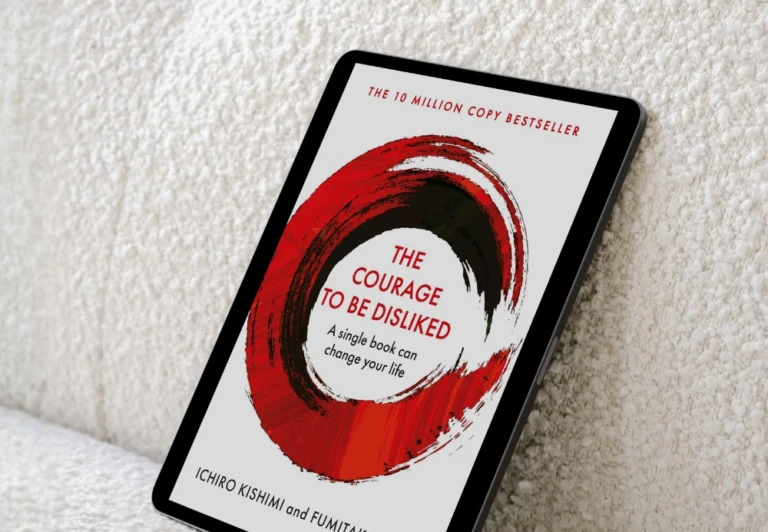
The lowdown on The Courage to be Disliked
The Courage to be Disliked is a conversation that unfolds over five non-consecutive nights between a sceptical young man and a wise philosopher, who introduces him to the ideas of Alfred Adler (one of the big names in psychology, but way less doom-and-gloom than Freud).
Each chapter tackles a different theme: identity, relationships, freedom, belonging, and purpose, with the philosopher slowly debunking everything the young man thinks he knows about happiness and success.
As the nights go on, one idea becomes clear: your life doesn’t have to stay the way it is.
The concept behind this book is unapologetic: happiness is a choice, and you can choose it right now, not once you quit your job, not once your boss finally respects your boundaries, and not once you hit some checkbox version of “success” that everyone else decided for you.
You just need the courage to let go of all the things keeping you stuck.
Things like:
- Your obsession with being liked
- Your need to please everyone
- Your belief that your past defines who you are
The philosopher in the book argues that we suffer because we’ve chosen to. Not consciously, but because on some level, we’re afraid of changing and being disliked.
Which hits deep. Because it means that some of the pain we’re carrying (aka the burnout, the people-pleasing, the constant second-guessing) might actually be a way of staying safe and staying small.
But on the other hand, it’s also incredibly freeing.
Because it means you’re not stuck. You’re not behind. And you don’t need to heal before your life can get better.
You just need the courage to think differently and take the first step.
How easy is The Courage to be Disliked to read?
Honestly? That depends on your patience level.
The entire book is written in a conversational format (think: student asks a question, philosopher answers, student pushes back, repeat), so it feels more like a podcast transcript than a traditional self-development book.
If you love deep, layered conversations and philosophical debates, you’ll probably enjoy the rhythm. But if you prefer a straight-shooter style (like Mel Robbins or Brianna Wiest), this one might feel a bit like hard work. There were moments where I wanted to highlight everything… and others where I wanted to skip ahead and get to the point.
It’s not a digestible step-by-step framework.
It’s a series of uncomfortable (but freeing) mindset shifts that build on each other, and they’re definitely worth sticking with. Even if you don’t read it cover to cover, just absorbing a few of the core ideas will leave you thinking differently about your life.
And by the end, you’re left with one big question:
What if your life could change—not someday, but now—just by thinking differently?
P.S. I encourage you to save this post (like now!!) so you can come back to it whenever you need to.
My 3 biggest takeaways from The Courage to be Disliked
1 | You are not defined by your past
This one hit me the hardest.
The philosopher explains that we’re not shaped by what’s happened to us but by the meaning we attach to those things. In other words, it’s not your past that’s sabotaging your success. It’s the beliefs you have that are holding you back.
What I mean by that is… if you label yourself as “too sensitive,” “burnt out,” “traumatised,” or “not good enough,” you start living as that identity. It shapes how you see yourself, and it limits what you believe is possible.
But the truth is, we all have the power to choose a new story. You are not your past. You are not your (self) diagnosis.
This doesn’t mean pretending hard things didn’t happen. It means refusing to let those hard things define you forever.
When I first left my toxic job, I told myself I was too burnt out to bounce back. That maybe I wasn’t cut out for success (or at least not the version of success I’d been chasing).
But the more I healed, the more I realised I wasn’t broken. I was just holding on to outdated beliefs that no longer served me. And once I rewrote my story, everything changed.
“Your life is not something that someone gives you, but something you choose yourself, and you are the one who decides how you live.”
The Courage to be Disliked
2 | People-pleasing is a choice, and you can opt out
This book might as well be labelled: Recovering People Pleasers, Read This.
One of the most powerful concepts is something called “the separation of tasks.” The idea is that you are only responsible for your own tasks, not other people’s reactions, opinions, or choices.
- So, if someone doesn’t like your decision? That’s their task.
- If your boss is annoyed that you said no to an urgent request at 9 pm? Their task.
- If a friend misunderstands your boundary? Yep—their task.
Your only job is to do what aligns with your values, and let the rest go.
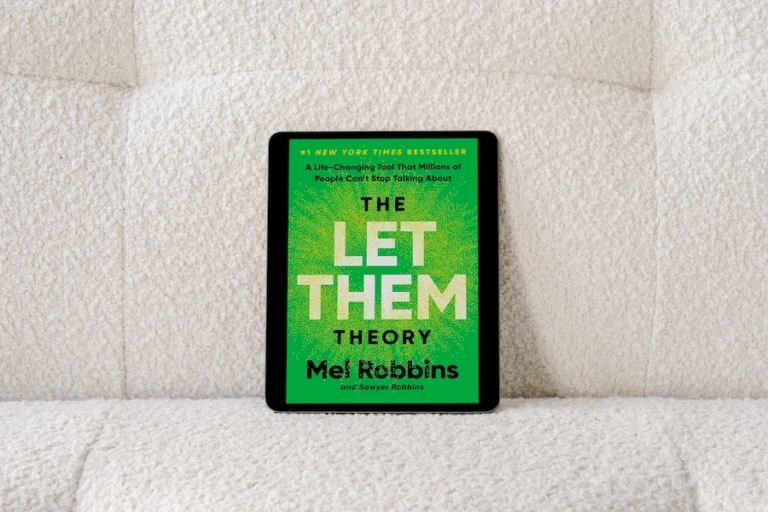
This instantly reminded me of The Let Them Theory where Mel Robbins explains how freedom comes from stepping back.
Where Mel says let them, this book says separate the task.
Same energy, same lesson: you’re not responsible for other people’s emotions.
3 | Real happiness comes from self-acceptance
I believe you attract the energy you put out.
If you start thinking more positively and hyping yourself up with mantras like “I’ve got this” and “I’m capable”, then chances are you’ll receive opportunities that reflect that back to you.
The way you speak to yourself matters. Your outlook matters. Energy matters.
But… affirmations alone won’t change your life if you’re still rejecting who you are underneath. Which is exactly what The Courage to be Disliked invites you to question.
The philosopher makes a clear distinction between self-affirmation and self-acceptance.
- Self-affirmation says: “I’m amazing, I can do it all, I always give 100%.”
- Self-acceptance says, “Right now, I’m at 60%. And that’s okay. I can still move forward from here.”
It’s not about lowering the bar—it’s about getting radically honest with yourself.
You don’t need to keep performing and pretending to be someone you’re not. You can meet yourself exactly where you’re at.
This hit hard for me, because so many of us struggling with burnout are exhausted by the pressure to always be productive, and crush it. But real growth doesn’t start with hype. It starts with honesty.
And sometimes honesty sounds like: I’m tired. I’m trying. But I’m still worthy.
The philosopher calls this affirmative resignation, not in a defeatist way, but as a way of accepting who you are right now, while still choosing to grow.
“One cannot change what one is born with. But one can, under one’s own power, go about changing what use one makes of that equipment. So, in that case, one simply has to focus on what one can change, rather than on what one cannot. This is what I call self-acceptance.”
The Courage to be Disliked

Final thoughts
Would I recommend The Courage to be Disliked?
Yes, but with caveats.
If you’re in a season of burnout, stuck in a draining AF job, or constantly trying to prove your worth to others, this book will shake something loose. It’s an invitation to stop waiting for permission and start choosing your own peace.
The format isn’t for everyone (and trust me, I rolled my eyes at the young man more than once), but the message is clear, challenging, and kind of life-changing..
You don’t need to be perfect or “liked” to create a life you love.
You just need courage.
You’ve got this.
Thalia xx
Just a heads up — This post contains affiliate links. If you make a purchase using the links above, then I will be rewarded at no extra cost to you. Thank you, as always, for your support.